


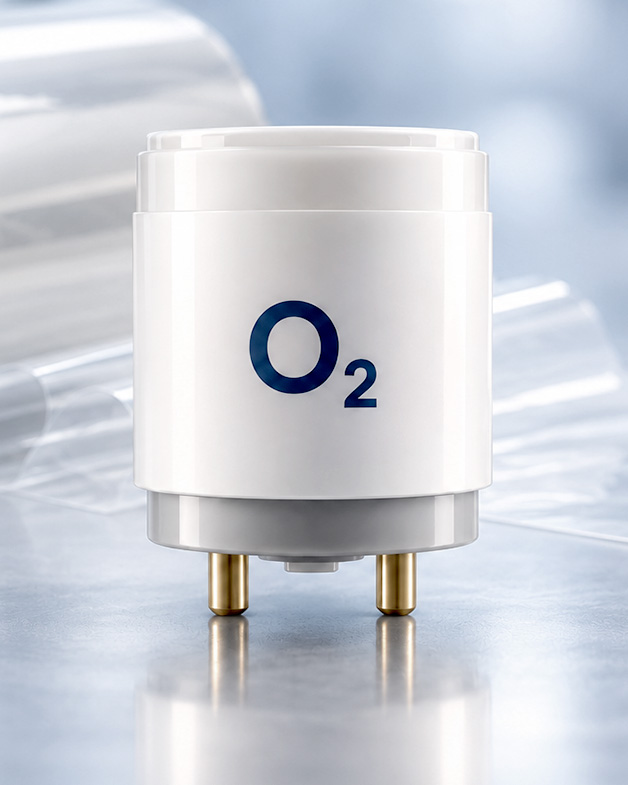
PTFE Membranes for Galvanic Oxygen Sensors
A galvanic oxygen sensor, also known as an electro-galvanic fuel cell, is a self-powered electrochemical device used to measure oxygen concentration. It operates much like a small battery, where oxygen acts as the reactant: the more oxygen that diffuses into the sensor, the greater the electrical current generated.
In medical applications, galvanic oxygen sensors are commonly used to monitor and control oxygen levels in respiratory and life-support equipment, helping ensure that the correct oxygen concentration is delivered or maintained.
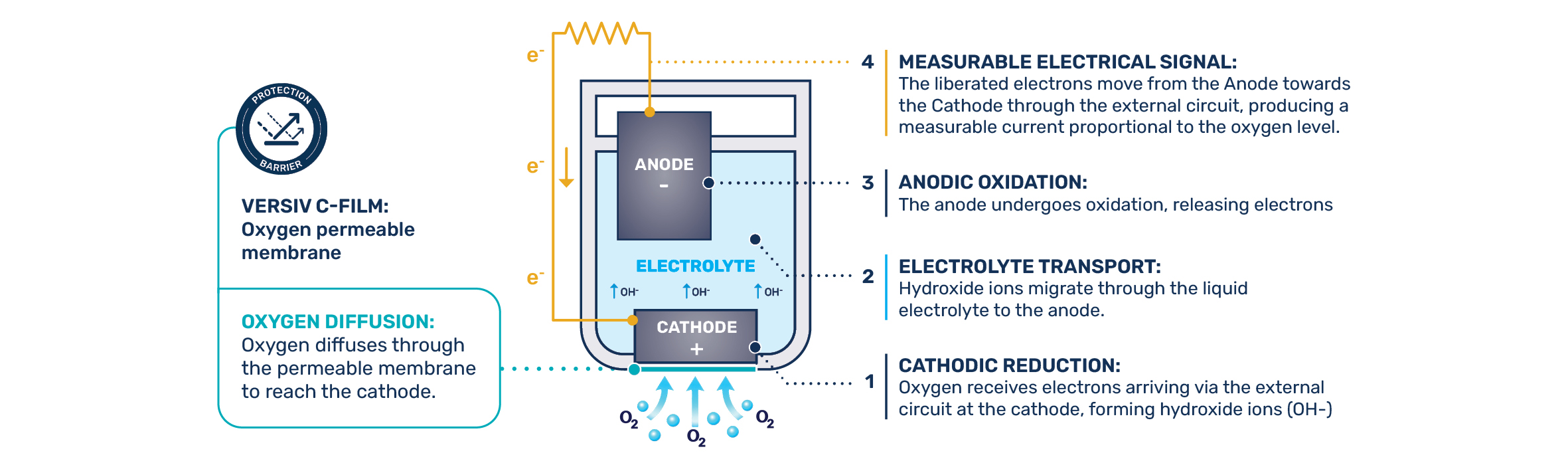
Within the sensor, oxygen measurement relies on a controlled electrochemical process. Oxygen from the surrounding media diffuses through the sensing membrane and reaches the cathode, where it is reduced by accepting electrons. The resulting ions move through the liquid electrolyte to the anode, where an oxidation reaction releases electrons.
This continuous exchange of electrons generates an electrical current between the two electrodes. When passed through an internal resistor, the current produces a measurable voltage that is proportional to the oxygen partial pressure, allowing the sensor to determine the oxygen concentration in the surrounding gas.
Versiv C Film membrane plays a critical role in this process by controlling oxygen transport while protecting the electrochemical sensing cell.
- Controlled oxygen diffusion: Consistent film thickness regulates the rate at which oxygen reaches the cathode, supporting stable and repeatable sensor response.
- Sensing cell protection: Pinhole-free construction helps contain the electrolyte while limiting uncontrolled gas ingress and particulate contamination.
Combining controlled thickness, pinhole-free construction and the inherent chemical resistance of PTFE, Versiv C Film provides a reliable sensing membrane for demanding oxygen-sensing applications.

