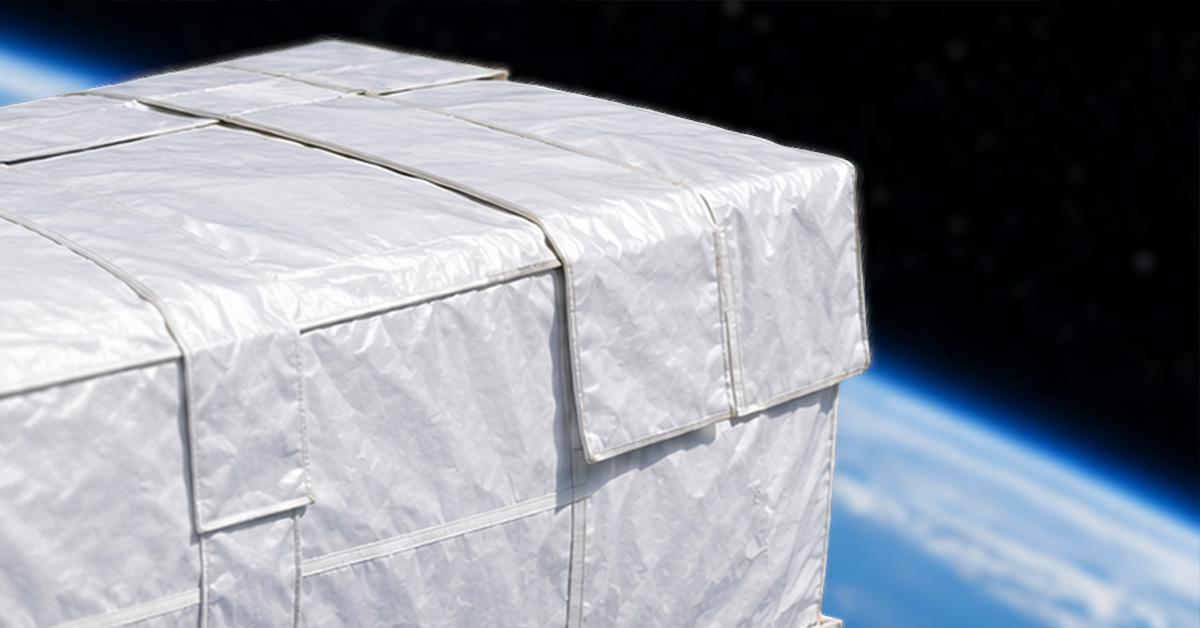
Im Vakuum des Weltraums kann Wärme nicht auf die gleiche Weise gehandhabt werden wie auf der Erde. Mehrlagenisolierungen (MLI-Decken) sind darauf ausgelegt, die Temperatur zu regulieren, indem sie die Übertragung von Wärmestrahlung zwischen dem Raumfahrzeug und seiner Umgebung verlangsamen. Ihre Leistung beruht auf einem Schichtaufbau, der typischerweise reflektierende Folien oder Filme mit Abstandshaltermaterialien und äußeren Schutzgeweben kombiniert, wodurch eine leichte Barriere entsteht, die die Hardware des Raumfahrzeugs vor extremen Temperaturschwankungen schützt.
Die Materialarchitektur einer MLI wird von einer Vielzahl von Faktoren bestimmt, wie Missionsumgebung, räumliche Anordnung und die Empfindlichkeit der Hardware, die sie schützt.
Im Folgenden sind einige wichtige Eigenschaften aufgeführt, die zu beachten sind:
Optische und thermische Eigenschaften
Blendungs- und Reflexionskontrolle von Raumfahrzeugen
Im Weltraum können glänzende Folien oder metallische Oberflächen Sonnenlicht in Kameras, Sensoren, Sternensensoren, optische Nutzlasten oder sogar auf Astronauten reflektieren. Wenn Blendung ein Problem darstellt, können Designer eine matte, diffuse oder speziell behandelte Außenfläche wählen, anstelle einer stark reflektierenden.
Solarabsorptionsgrad für die thermische Kontrolle
Der Solarabsorptionsgrad gibt an, wie viel einfallendes Sonnenlicht eine Oberfläche absorbiert. Ein hoher Wert bedeutet, dass das Material mehr Sonnenenergie absorbiert und sich stärker erwärmt. Ein niedriger Wert bedeutet, dass es mehr Sonnenlicht reflektiert und kühler bleibt. Für die thermische Kontrolle von Raumfahrzeugen ist der Solarabsorptionsgrad eine der wichtigsten Eigenschaften zur Vorhersage der Oberflächentemperatur und des Energiehaushalts.
Äußere und innere Infrarot-Emissionsgrade
Der Infrarot-Emissionsgrad gibt an, wie effektiv eine Oberfläche Wärme als Infrarotenergie abstrahlt. Eine Oberfläche mit hohem Emissionsgrad kann Wärme effizient abführen. Eine Oberfläche mit niedrigem Emissionsgrad speichert Wärme besser.
Der äußere Emissionsgrad ist wichtig für die Wärmeabfuhr in den Weltraum; der innere Emissionsgrad ist wichtig für den Strahlungswärmeaustausch zwischen der Decke, der Raumfahrzeugstruktur, den Instrumenten und den inneren Oberflächen.
Gesamter effektiver Emissionsgrad
Dies ist die thermische Leistung des gesamten Materialsystems und nicht die seiner äußeren oder inneren Schichten.
Bei einer MLI-Decke hängt der effektive Emissionsgrad von der Anzahl der Schichten, Abstandshaltern, Kompression, Nähten, Steppungen, Perforationen, Belüftung, Randverlusten und der Installationsqualität ab. Zwei Materialien mit ähnlichen Oberflächenwerten können sich nach dem Zusammenbau zu einer Decke sehr unterschiedlich verhalten.
Elektrische Eigenschaften
Elektrostatischer Entladungsschutz (ESD)
Raumfahrzeugoberflächen können durch Plasma, Sonnenstrahlung oder Partikelumgebungen elektrische Ladung aufbauen. Wenn sich diese Ladung plötzlich entlädt, kann dies die Elektronik beschädigen oder Instrumente stören. ESD-präventive Materialien sind in der Regel leitfähig oder dissipativ genug, um die Ladung sicher abzuleiten, oft in Kombination mit einer ordnungsgemäßen Erdung. Materialstandards für Raumfahrzeuge berücksichtigen üblicherweise ESD, Erdung, Kontamination, Ausgasung und Entflammbarkeit als zentrale Aspekte der Materialkontrolle.
Schutz vor atomarem Sauerstoff
Atomarer Sauerstoff ist ein großes Problem im niedrigen Erdorbit (LEO). Er ist hochreaktiv und kann exponierte Polymere, Folien, Beschichtungen und Gewebe erodieren oder zersetzen. Wenn das Raumfahrzeug im LEO betrieben wird, benötigt das Außenmaterial möglicherweise atomar-sauerstoffbeständige Beschichtungen oder von Natur aus widerstandsfähige Außenschichten.
Umweltbeständigkeit
Kontaminationskontrolle und geringe Ausgasungsleistung
In der Weltraumumgebung können Materialien eingeschlossene Gase, Rückstände, Partikel oder kondensierbare Dämpfe freisetzen, die sich auf benachbarten Oberflächen ablagern können. Dies ist besonders kritisch in der Nähe von Optiken, Sensoren, Kameras, Radiatoren, Solarmodulen und wissenschaftlichen Instrumenten, wo selbst geringe Kontaminationsgrade die Leistung beeinträchtigen können.
Aus diesem Grund wird die Industriestandard- ASTM E595 Prüfmethode verwendet, um Raumfahrzeugmaterialien auf geringe Ausgasungsleistung zu bewerten und zu qualifizieren, was dazu beiträgt, Kontaminationsrisiken während des Starts, im Orbit und im Langzeitbetrieb zu reduzieren.
Schutz vor Sonnen- und kosmischer Strahlung
Raumfahrzeuge sind ständig einem rauen Spektrum solarer Strahlung ausgesetzt, das von energiearmem ultraviolettem (UV) Licht bis zu hochenergetischen ionisierenden Partikeln (wie Protonen und kosmischen Strahlen) reicht. Zusammen stellen diese Strahlungsquellen eine doppelte Bedrohung dar: UV-Licht zersetzt die Außenfläche – wodurch Polymere reißen, verspröden und sich verfärben – während hochenergetische Partikel tief in das Raumfahrzeug eindringen, Strukturverbundwerkstoffe beschädigen und die interne Elektronik stören.
Die Materialauswahl muss beide Bedrohungen gleichzeitig berücksichtigen, indem UV-stabile Außenbeschichtungen (wie Fluorpolymere) in Verbindung mit hochdichten oder wasserstoffreichen Abschirmmaterialien verwendet werden, um ionisierende Dosen zu absorbieren und so die strukturelle, thermische und elektronische Integrität des Raumfahrzeugs über seine Missionsdauer zu gewährleisten.
Mechanische Eigenschaften
Mechanische Belastbarkeit unter Missionsbedingungen
Dies bedeutet, zu prüfen, wie sich das Material unter den physikalischen Belastungen verhält, denen es während der Mission ausgesetzt sein kann. Beispiele hierfür sind Startvibrationen, akustische Belastung, Handhabung, Entfaltungsbewegungen, Spannung, Faltung, thermische Zyklen und Kontakt mit Hardware.
Minimale, optimale und maximale Szenarien bedeuten in der Regel: Best-Case-, Expected-Case- und Worst-Case-Belastung. Das Material muss den Worst Case überstehen, ohne zu reißen, sich zu verschieben, Partikel abzugeben, Mechanismen zu blockieren oder die thermische Leistung zu verlieren.
Anforderungen an Entlüftung und Druckausgleich
Entlüften bedeutet, eingeschlossene Luft oder Gase entweichen zu lassen. Während des Starts und Aufstiegs fällt der Druck schnell ab. Wenn Luft in einer Decke, einem Hohlraum oder zwischen Materialschichten eingeschlossen ist, kann sie sich aufblähen, reißen, delaminieren oder den Einsatz stören.
MLI-Decken haben zwei Seiten: Die Seite, die der Raumfahrzeugstruktur zugewandt ist; und die Seite, die der externen Umgebung zugewandt ist. Beide Seiten benötigen möglicherweise kontrollierte Entlüftungswege, je nachdem, wie die Decke befestigt und abgedichtet ist.
Versiv Beta-Gewebe: Die äußerste weiße Schicht

Versiv Beta-Gewebe hat eine lange Erfolgsgeschichte in der rauen Weltraumumgebung:
- Leicht, stark und außergewöhnlich dicht gewebt: Das Beta®-Gewebe schützt vor atomarem Sauerstoff – insbesondere bei Flügen im niedrigen Erdorbit.
- Außergewöhnliche Beständigkeit gegen Biegewechselermüdung im Vergleich zu Standard-beschichteten Geweben.
- Leicht beschichtet, um geringe Ausgasung zu ermöglichen, was es ideal für Raumfahrt- und Luftfahrtmissionen macht.
- Hochbeständig gegen die Auswirkungen von Thermozyklen, solarer und Vakuum-Ultraviolettstrahlung.
- Fähigkeit, rauen Weltraumbedingungen standzuhalten und als Barriere und Schutz zu dienen.
- Chemisch inert: Beständig gegen Korrosion und atomaren Sauerstoff.
- Geringe elektrische Verluste.
- ESD-Version erhältlich.
- Nicht brennbar und feuerbeständig.
- Silikonfrei.
- ASTM E595-konform.
Möchten Sie mehr über Versiv Beta Cloth in MLI-Anwendungen erfahren?
Kontaktieren Sie uns noch heute!
Beta® ist eine eingetragene Marke von Advanced Glassfiber Yarns LLC (AGY).