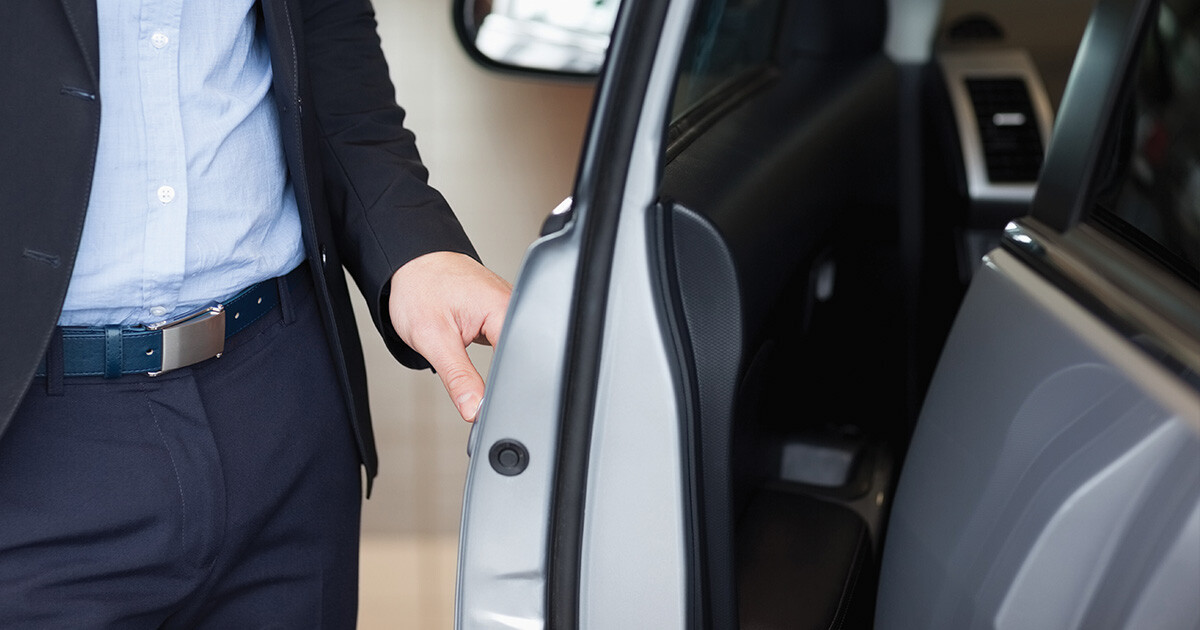

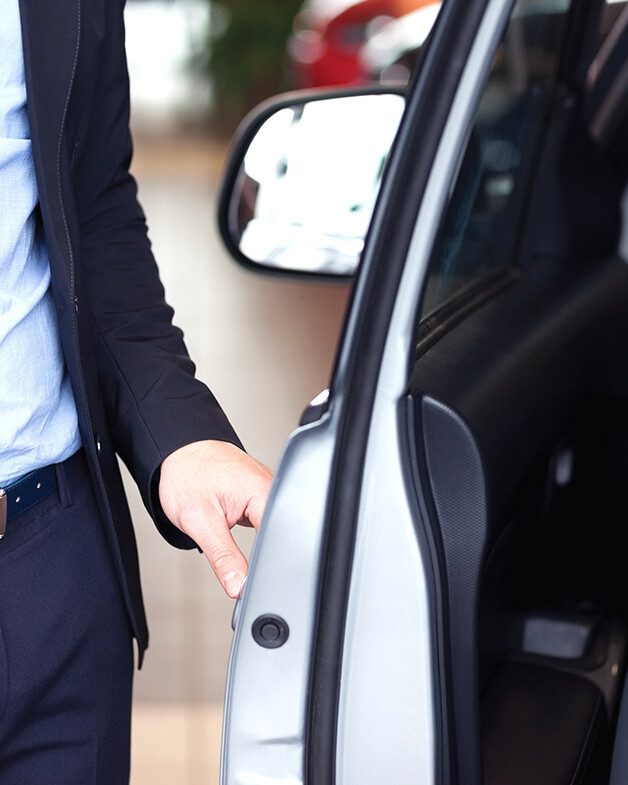
Man opening door of a car, showing the rubber sealing of the door.
Back arrow
Automotive Icon
Lösungen für die
Automotive
Vorgestellt

PTFE Release for High-Temperature Rubber Extrusion and Curing

Versiv PTFE-covered non-stick release belts and sheets minimise production rejects in the manufacturing of automotive seals made of extruded rubber.

Man opening door of a car, showing the rubber sealing of the door.

Alle unsere Produkte für diesen Markt werden individuell auf Ihre Anforderungen zugeschnitten.
Kontaktieren Sie uns, um Ihre Anforderungen mit uns zu besprechen.

Ausgewählte Versiv-Produkte

Produkt
Beschreibung
Standardprodukt für grundlegende Anforderungen. Halbgezwirntes Garn.
Standardprodukt für grundlegende Anforderungen. Gezwirntes Garn.
Spezialprodukt mit besonders glatter Oberfläche und langlebiger Trennwirkung.
Laminiertes Produkt mit hervorragenden Trenneigenschaften und erhöhter Lebensdauer.
Special Products
Please contact our sales team for further info

Eigenschaften

  • Flexible and thermally weldable
  • Excellent non-stick ptfe surface
  • Mechanically stable under pressure
  • Thermally stable up to 500°F/260°C
  • Eliminates the need for using release agents or silicone sprays
  • Resistant to polymeric materials such as PU, PE and PVC
  • Excellent heat transfer
  • Design options for all types of machines
  • Consistent mechanical wear
  • Guidable edges

Vorteile

  • Optimal release
  • Higher quality finishes  
  • Consistent production processes
  • Improved productivity
  • Improved cost effectiveness
  • Less material waste
  • Defect-free product
  • No cross contamination
  • Risk of unplanned maintenance minimized

Versiv Manufaturing Aids for Extruded Rubber Processing

Rubber profile processing is a complex operation that produces automotive seals, primarily for doors and windows. This process involves high-volume manufacturing in a continuous sequence, requiring flexibility to handle corrosive chemical additives mixed with various rubber substrates.

Versiv belts and release sheets are widely used in rubber profile manufacturing, ensuring excellent release during the curing and cooling of polymeric materials like polyurethane (PU), polyethylene (PE), and polyvinyl chloride (PVC).

Versiv PTFE coated belts and sheets work as release solutions for rubber profile processing of automotive window and car door seals

During the extrusion stage, unvulcanised rubber is forced through dies under pressure, shaping it into a profile that subsequently undergoes crosslinking, heat treatment, and curing to achieve its final form. This continuous high-temperature rubber extrusion system, which can extend up to 40 meters in length, is the pathway through which the release solutions flow.

Versiv PTFE-Coated fabrics act as a release surface for all the sequential processing stages, as well as the transportation surface for this heavy chemical load. These non-stick PTFE products ensure that final products release perfectly from the belt at each processing stage.

Hard wearing and smooth, Versiv PTFE release solutions support continuous production and minimise the risk of unplanned downtime and rejects during the curing process, boosting efficiency and quality in rubber profile processing.
Welche Produkte können mit den PTFE-Trennlösungen von Versiv hergestellt werden?

  • Door Seals
  • Window Seals
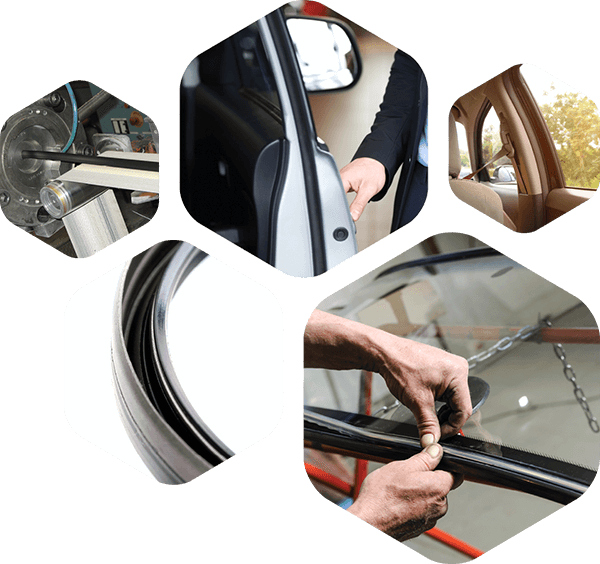
Collage showing: rubber being extruded over Versiv belting; Man opening vehicle's door; Car windows from inside; Zoom in on rubber sealing; Hands adding rubber to window.

Geringer Reibungskoeffizient bei Gleitlagern für unterschiedlichste Branchen

Häufig gestellte Fragen

Was sind Versiv Low Friction Linings (LFL)?
caret down
Wann werden Versiv Low Friction Linings (LFL) eingesetzt?
caret down
Wie wichtig ist die Härte des Low Friction Lining-Materials?
caret down
Welchen Temperaturbereich halten Versiv LFL aus?
caret down
Welchen Dickenbereich können Sie anbieten?
caret down
Wie verbessern LFL die Leistung von Magnetventilen?
caret down
Können Versiv LFL herkömmliche Schmierstoffe ersetzen?
caret down
Wie tragen Versiv LFL zur Fahrzeugeffizienz bei?
caret down
Welche Langzeiteigenschaften bieten Versiv LFL?
caret down
Welche Konstruktionsvorteile bieten Versiv LFL?
caret down
Wie unterstützen Versiv LFL innovative Fahrzeugkonstruktionen?
caret down
Wie kann ich mehr über den Einsatz von Versiv LFL in meinen Fahrzeugkonstruktionen erfahren?
caret down
Wie wird ein Verrutschen des LFL-Materials im Polrohr verhindert?
caret down
In welchen Lieferformen sind Versiv LFL erhältlich?
caret down
Sind Muster verfügbar?
caret down
Stellt Versiv die erforderliche Dokumentation bereit?
caret down
Two men and a woman with PPE discuss a document in factory floor
Strenge Teststandards
Versiv entwickelt maßgeschneiderte Anwendungstests, die auf den einzelnen Produktverwendungen unserer Partner basieren, um die bestmögliche Lösung zu finden. Einige Tests, die im Lieferumfang enthalten sind, aber nicht auf Umwelt-, Haltbarkeits- und Zuverlässigkeitstests beschränkt sind, geben Ihnen die Gewissheit, dass die Produkte in den rauesten Umgebungen funktionieren. Unsere Tests beginnen während des gemeinsamen Entwicklungsprozesses, um relevante Tests zu entwickeln und Daten zu sammeln, die es uns ermöglichen, schnell marktreife Lösungen zu entwickeln.
Some of our tests:
  • FTMS 191A-5041

  • FTMS 191A-5030

  • FTMS 191A-5102

  • FTMS 191A-5136

  • ASTM D149-81

Wie können wir helfen?
Sprechen Sie mit unserem Ingenieurteam, um noch heute mit der Arbeit an Ihrer Lösung zu beginnen!
Kontaktiere uns