
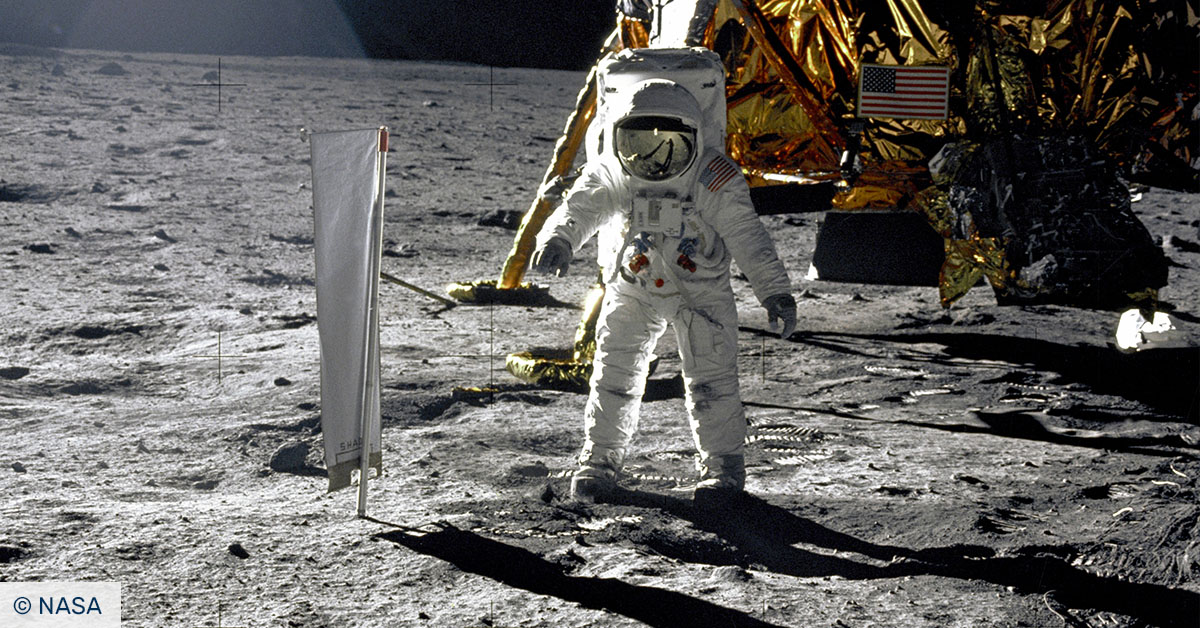
Originally developed in response to the 1967 Apollo 1 fire, Beta Cloth has continuously played an important role in space exploration, particularly in protecting crewed spacecraft and the astronauts who fly in them.
Beta Cloth: A Material Born from the Apollo Program
More than 40 years before the modern era of space exploration, NASA’s mission to land the first humans on the Moon was nearly derailed by tragedy. During a ground test of the Apollo 1 command module, a fire swept through the spacecraft, destroying the module and killing the three astronauts inside.
In the aftermath, NASA undertook a major redesign of the Apollo command module and reexamined every element of astronaut safety, including the materials used in space suits. Engineers needed an outer layer that could meet a demanding set of requirements: it had to be durable and strong, yet lightweight and flexible, while also resisting combustion in the harsh conditions of spaceflight.
The iconic white colour of Beta Cloth - present on the multilayer blankets that insulate the International Space Station and the A7L space suit worn in Apollo missions has a purpose: To provide high resistance to solar and vacuum ultraviolet radiation.
Collaboration
Beta cloth emerged from a close collaboration between NASA with companies such as Owens-Corning Fiberglass and DuPont, combining advanced glass fiber technology with specialized coatings expertise.
The material was later produced by Chemfab, now Versiv, and became known for the qualities NASA needed most: strength, flexibility, light weight, and resistance to combustion - and the iconic white colour that provides high resistance to solar and vacuum ultraviolet radiation.
Integrated Thermal Micrometeoroid Garment (ITMG) of the A7L space suit worn for the Apollo missions and Skylab program. The PTFE fiberglass fabric layer provided both thermal protection as well as shielding from abrasive lunar dust during Moon landings.