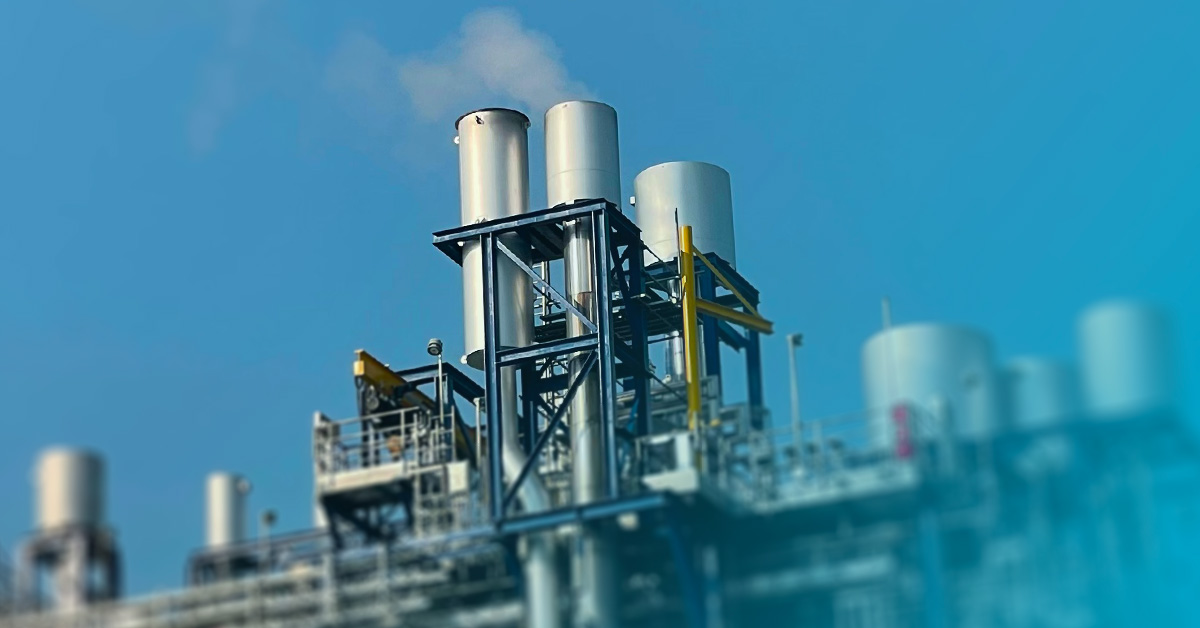
For power plants, effective flue gas containment can be challenging, but it is not optional.
Flue gas management is a inevitable part of our growing demand for energy generation. A by-product from burning fuels (coal, gas, oil, biomass), these emissions typically contain harmful pollutants like sulfur oxides, nitrogen oxides, carbon monoxide, and particulate matter such as soot and fly ash.
Flue gases travel from the boiler of power plants through a series of ducts and treatment systems, alongside harmless gases such as nitrogen, carbon dioxide, and water vapor. To safely guide and condition this flow, power plants rely on large, engineered flue-gas paths built from steel structures, ducting, and emissions-control equipment, all designed to withstand high temperatures, variable pressures, and corrosive environments.
Challenges with flue gas containment in power plants - and how non-metallic expansion joints can solve them
In addition to corrosion exposure, the continuous thermal cycles in power generation naturally introduces vibration, movement, and the risk of misalignment to the system. As temperatures fluctuate, the steel ductwork expands and contracts unevenly, while internal pressure pulses from fans and flow changes send dynamic forces through the structure.
Over time, these forces accumulate — shifting joints, stressing supports, and creating micro-movements that can lead to leaks, fatigue, and performance losses unless properly managed.
Flexible expansion joints become essential in these environments because they are engineered to absorb multi-directional movement while maintaining a reliable seal under fluctuating loads.
Unlike metal expansion joints, which typically allow movement in fewer directions with higher reaction forces, flexible expansion joints accommodate broader displacement with far less stress transferred to the surrounding equipment. This flexibility protects ductwork, maintains alignment, and reduces vibration, ultimately extending system life and ensuring stable, efficient operation within demanding flue-gas systems.
Benefits of insulated multi-layer expansion joints:
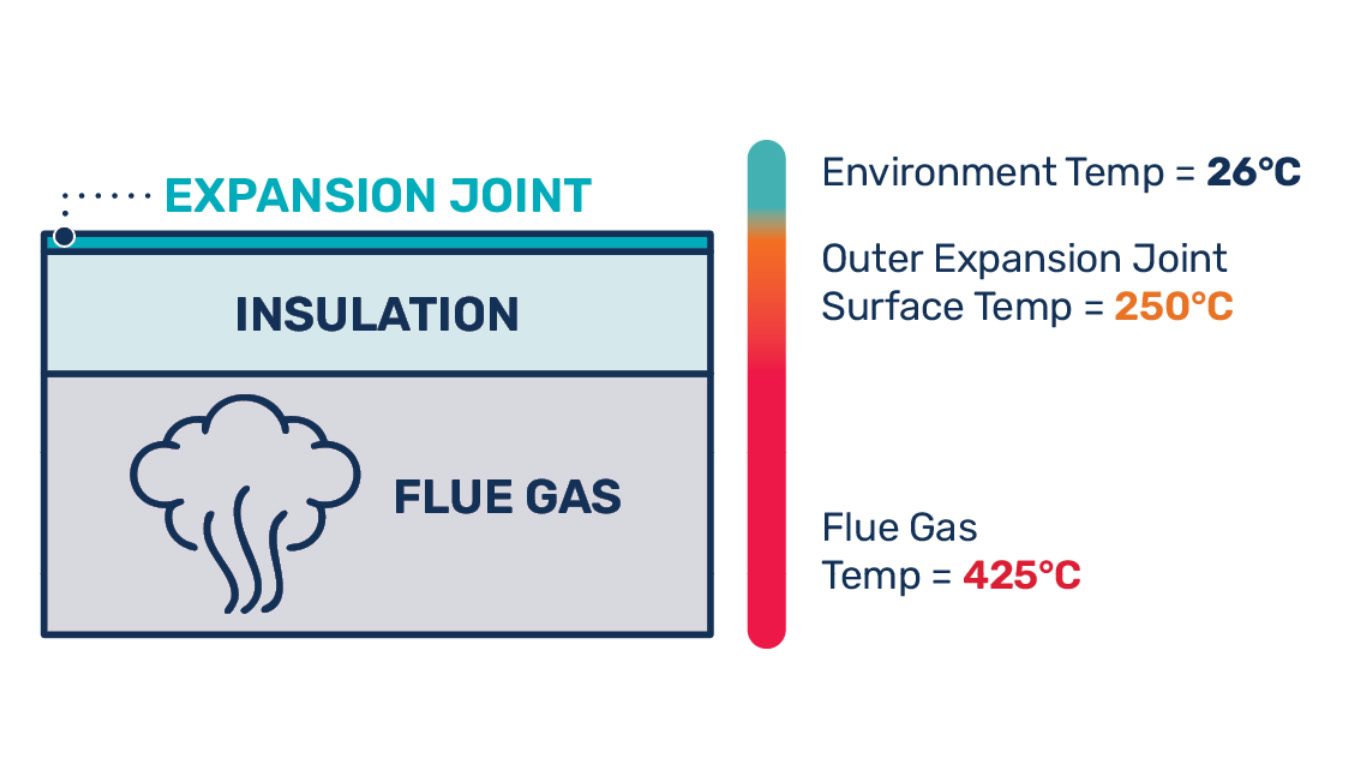
Stacking flexible expansion-joints with insulation increases the continuous service temperature of the material dramatically, by protecting the expansion joint fabric from much of the heat in the flue gas stream.
Careful attention must be paid to protection of the expansion joint fabric in the clamping area and to prevention of flue gas condensation in the insulation or on the fabric.
Flueflex: Versiv non-metallic expansion joints
Versiv Flueflex non-metalic expansion joints is Versiv solution to chemical, thermal and mechanical challenges in power plants. Versiv Flueflex consist of high strength fiberglass fabrics coated with a specially formulated fluoropolymer coating designed to provide enhanced flex properties and excellent high temperature performance.
These high-performance fabrics can be used either on its own as a single layer non-metallic expansion joint or as a part of a multilayered product.
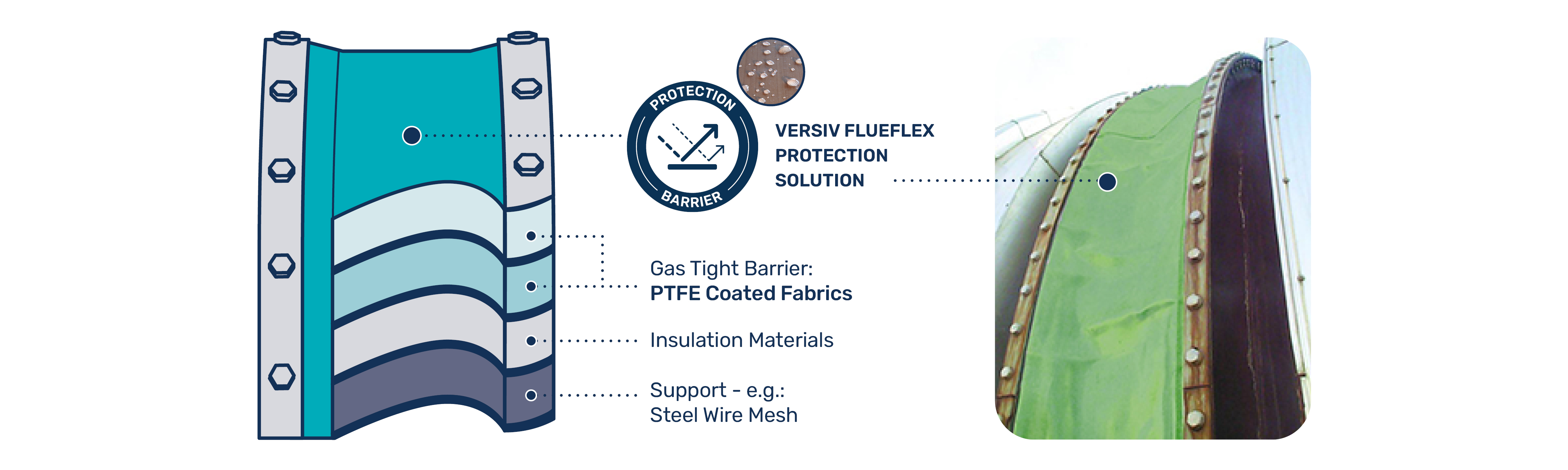
Versiv Flueflex Construction:
- Chemical Barrier: Laminated barrier films reduce permeation of potentially damaging flue gases. Void and pin-hole free, multi-laminar construction of multilayered cast PTFE film optimizes the cost/benefit trade off related to barrier properties.
- Reinforcements are the primary factor in influencing material strength over time. Fine-filament fiberglass fabrics provide superior flex-retention for long life.
- PTFE coating composition and quality dramatically affect flex durability, susceptibility to cracking in service as well as the continuous use temperature of the material. Specially formulated fluoropolymer coatings provide protection for the reinforcements
Features of Versiv Flueflex at a glance
- Strength retention and superior flex over long term in demanding environments
- Void and pin-hole free surface protects against highly corrosive and toxic fluids
- Working temperatures up to +260 ºC / +500ºF
- High resistance to most corrosive chemicals
- Reliability and low maintenance costs
- Ability to be fixed / repaired on site